
In boardrooms, sustainability conversations are evolving fast—targets are being set, disclosures are improving, and net zero commitments are becoming mainstream.
Yet, one area continues to remain underestimated, under-measured, and often under-managed:
For most companies, this is not just a gap. It’s the largest share of their carbon footprint—and the hardest to control.
What Are Scope 3 Emissions?
Under the Greenhouse Gas Protocol, emissions are classified into three categories:
Direct emissions from owned operations
Indirect emissions from purchased energy
All other indirect emissions across the value chain
Focus Area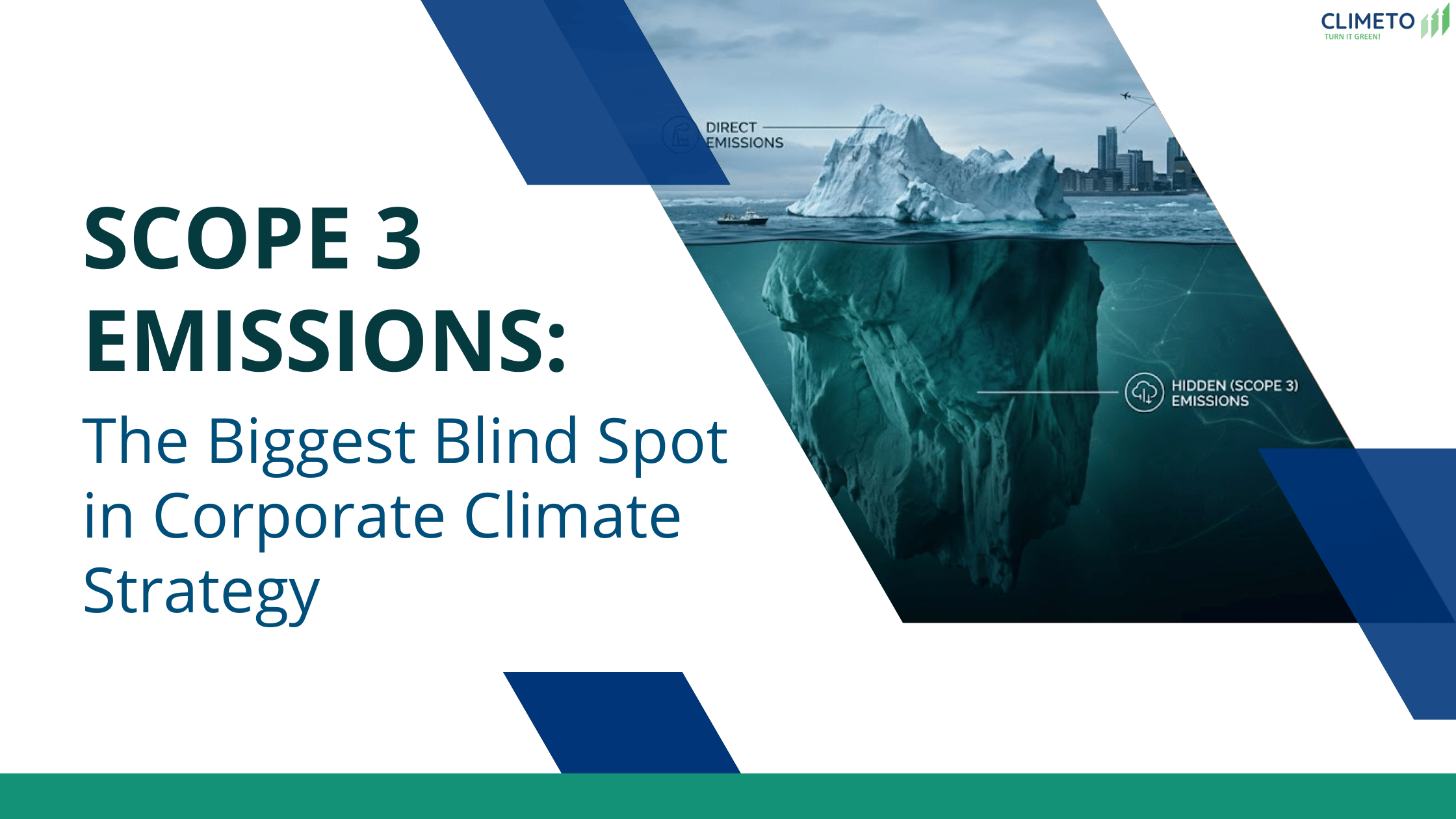
Scope 3 includes emissions from:
- Purchased goods and services
- Transportation and distribution
- Business travel
- Waste generated in operations
- Use of sold products
- End-of-life treatment
Everything that happens outside your direct control—but because of your business.
Why Scope 3 Is the Largest Contributor
Across industries, Scope 3 can account for 70% to 90% of total emissions.
Packaging + supply chain + product use
Raw materials + product lifecycle (fuel/energy use)
Manufacturing + end-of-life disposal
A company can reduce its internal emissions significantly—and still leave the majority of its climate impact untouched.
Why It Remains a Blind Spot
Data Complexity
Scope 3 requires data from suppliers, vendors, logistics partners, and customers—often across geographies and varying standards.
Limited Control
Unlike Scope 1 and 2, companies don't own these emissions. They must rely on influence, collaboration, and procurement decisions.
Measurement Challenges
Many companies still depend on industry averages, emission factors, and estimates instead of primary data—creating accuracy gaps in reporting.
Lack of Accountability
Scope 3 often sits outside operational KPIs, making it harder to track, manage, or incentivize internally.
Why Scope 3 Can't Be Ignored Anymore
Investor Expectations
ESG-focused investors are increasingly asking: “What about your value chain emissions?”
Regulatory Direction
Global disclosure frameworks like TCFD and evolving standards from ISSB are pushing companies toward full value chain transparency.
Net Zero Integrity
Without Scope 3, net zero claims risk being incomplete—and climate strategies lose credibility.
Real Impact Lies in Scope 3
If the goal is actual emission reduction (not just reporting)—Scope 3 is where the biggest opportunities exist.
How Companies Can Start Addressing Scope 3
Identify the most material emission categories. Not all 15 categories will be equally relevant.
Focus on raw materials, logistics, and the product use phase—where the greatest volume sits.
Move from transactional relationships to collaborative sustainability partnerships—supplier data sharing, emission reduction targets, sustainable procurement policies.
Shift from secondary data to primary data: supplier-specific emissions, lifecycle assessments, and digital tracking tools.
Scope 3 should not sit in sustainability teams alone. It must connect with procurement, operations, product design, and leadership KPIs.
The Strategic Opportunity
Scope 3 is often seen as a challenge. But for forward-looking companies, it's actually a competitive advantage—because it enables:
Scope 3 emissions are not just a reporting requirement. They are a reflection of how deeply a company understands its impact.
Ignoring them may simplify short-term reporting—but addressing them defines long-term sustainability leadership.